 James Kavanagh
Contents
- What do digital marketing courses cost in the UK? The short version
- Free digital marketing courses (£0)
- Self-paced and subscription courses (£30–£300)
- Bootcamps: where digital marketing courses cost more (£500 to several thousand)
- Accredited qualifications: CIM and DMI (£1,000–£4,000)
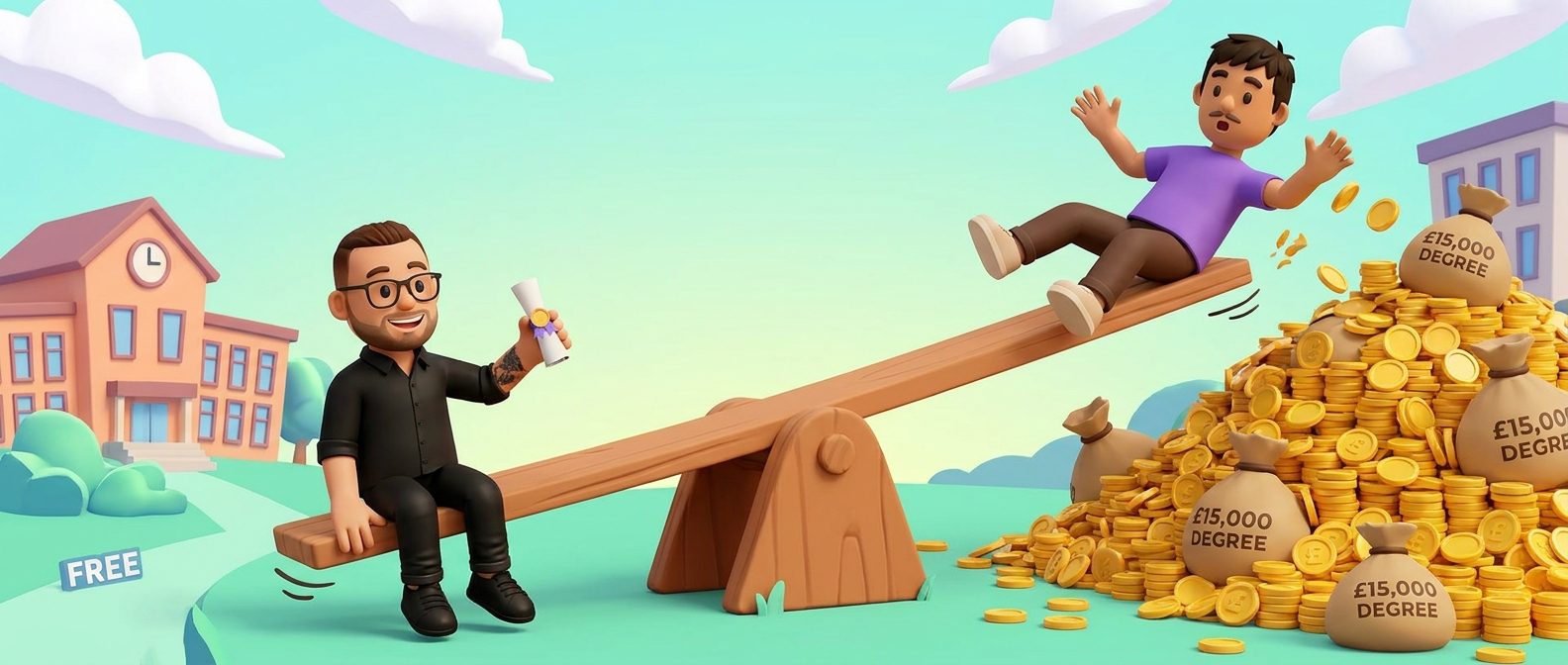
- University degrees (£9,000–£15,000+)
- What actually drives the price?
- Free vs paid: which should you pick?
- Is a digital marketing course worth the cost?
- Frequently asked questions
- The bottom line
So you want to know what digital marketing courses cost in the UK – and you’d like a straight answer, not a sales pitch dressed up as “an investment in your future.” Fair enough. The honest version is this: you can spend absolutely nothing, or you can spend the price of a decent second-hand car. Both can be the right call. It depends entirely on what you’re actually buying.
This is the 2026 price guide we wish someone had handed us on day one: real UK price bands, what sits behind each one, and how to tell whether a course is worth a single penny of it. No fluff, no “bonus modules worth £4,997, yours free today.” Just the numbers and some honest opinions.
Tempted to pay nothing at all? Here is our honest verdict on free online marketing courses vs paid.
What do digital marketing courses cost in the UK? The short version
Brace yourself: digital marketing courses cost anywhere from £0 to well over £15,000 in the UK. Most sensible people land somewhere in the middle. Here’s the lie of the land before we get into the weeds:
- Free (£0): Google, HubSpot and friends. Self-paced, no hand-holding.
- Self-paced and subscription (£30–£300): monthly platforms and professional certificates.
- Bootcamps (£500 to several thousand): structured, often live, sometimes with career support.
- Accredited qualifications (£1,000–£4,000): CIM and DMI, the names employers recognise.
- University degrees (£9,000–£15,000+): a full MSc, the scenic route.
Now let’s break down what you actually get for your money at each level. If you want the bigger picture on whether any of this is worth your time in the first place, we covered that in our pillar piece on whether digital marketing courses are still relevant in 2026.
Free digital marketing courses (£0)
Yes, you can learn a frightening amount for nothing. Google’s Digital Garage offers a free, globally recognised certificate across 26 modules – SEO, social, content, performance marketing and email automation included. Google Skillshop hands out free certifications in Google Ads and Analytics. HubSpot Academy gives away solid free certificates too. And many paid platforms, including Coursera, offer financial-aid routes that waive the fee entirely if you apply and qualify.
So what’s the catch? There isn’t one, exactly – but free buys you knowledge, not accountability. Nobody marks your work. Nobody chases you when you drift off after module four. Nobody tells you that your ad copy is doing the heavy lifting of a wet paper bag. Free is brilliant for foundations and useless for discipline. If you’re a self-starter, fill your boots. If you’ve bought three online courses and finished none of them, you already know the truth about yourself.
Self-paced and subscription courses (£30–£300)
This is the comfy middle. Subscription platforms such as Target Internet start at around £30 a month and give you a structured library plus assessments. The much-hyped Google Digital Marketing & E-commerce Professional Certificate, delivered through Coursera, runs at roughly £40 a month; because it’s designed to finish in about six months, you’re looking at somewhere around £200–£240 all in.
For the money you get structure, a recognised certificate and a clear path through the material. What you usually don’t get is a human being looking at your specific work and telling you where you’re going wrong. That’s the line that separates this tier from the next one.
Bootcamps: where digital marketing courses cost more (£500 to several thousand)
Bootcamps are where the price really starts to climb – and where the value can genuinely justify it. Prices commonly run from a few hundred pounds up to several thousand, with the most immersive career-change programmes sitting at the top end. You’re paying for cohort-based learning, live teaching, deadlines that actually exist, and at the premium end, career or placement support.
The good ones are worth every quid because they compress months of flailing into weeks of guided practice. The dodgy ones are a slideshow you could have found free on YouTube with a five-grand price tag stapled to it. The difference is always in the teaching and the feedback, never in the production values of the sales page.
Accredited qualifications: CIM and DMI (£1,000–£4,000)
If you want letters after your name that hiring managers recognise, this is the tier. Qualifications from the Chartered Institute of Marketing (CIM) and the Digital Marketing Institute (DMI) are typically delivered through training providers and tend to cost between £1,000 and £4,000 depending on the level, plus any membership and assessment fees on top.
Here’s a money-saving nugget most people miss: in England, DMI training can be fully funded through the apprenticeship levy for eligible employers, and non-levy-paying employers may still receive up to 95% government funding. Translation – if you’re employed, your accredited qualification might cost your boss next to nothing. Always check the levy and apprenticeship routes before you reach for your own card.
University degrees (£9,000–£15,000+)
At the top of the tree sits the full MSc. Universities including Westminster, Coventry and Bournemouth offer Digital Marketing Management master’s degrees, many accredited by CIM, the IDM and DMI all at once. For UK students that’s often £9,000 to £15,000 or more, plus a year or two of your life, with international fees higher still.
Is it worth it? For some paths – academia, big-corporate marketing, or a complete career pivot that needs a formal credential – absolutely. For a freelancer who needs to write emails that sell by next Tuesday, it’s a wildly expensive and slow way to learn skills you could pick up far faster elsewhere.
What actually drives the price?
Two courses can teach the same topics and differ in price by a factor of fifty. The difference is rarely the information – it’s the delivery. Here’s what you’re really paying for as the price climbs:
- Feedback on your work: a tutor reviewing your campaigns is expensive; a recorded video is not.
- Live teaching: real humans, in real time, answering real questions.
- Accreditation: a recognised stamp from CIM or DMI carries weight, and cost.
- Mentoring and community: one-to-one guidance and a room full of peers.
- Career support: portfolio help, introductions, job placement.
- Brand and track record: a provider with proof its students succeed can charge more, and often should.
Notice what’s not on that list: a flashy logo, a guru’s sports car, or a countdown timer. If most of the price is funding someone’s lifestyle rather than your learning, walk away. The right question is always “what am I actually getting for this?” – and the honest answer should be about teaching and feedback, not branding.
Free vs paid: which should you pick?
Go free if you’re disciplined, you only need the foundations, and you’re happy to be your own taskmaster. Go paid the moment you want feedback, structure, accountability, a proper portfolio, or an actual job at the end of it. The one thing free can never give you is somebody qualified telling you precisely why your work isn’t landing – and that single ingredient is usually what turns “I did a course” into “I got results.”
Whichever way you lean, choose deliberately rather than by whoever shouted loudest in your feed. Ask the hard questions first: what exactly am I getting, who is teaching it, what happens when I get stuck, and what will I actually have to show for it at the end?
Is a digital marketing course worth the cost?
Here’s the ROI maths, stripped of romance. If a paid course lands you one decent client, one promotion, or one campaign that doesn’t flop, it has almost certainly paid for itself – often many times over. A £2,000 course that wins you a £1,500-a-month retainer is the bargain of the century. The genuine waste isn’t spending money on learning; it’s buying a course you never finish.
We’ve seen exactly this play out: the right skills let people ditch hourly rates for value-based pricing and multiply what they earn, until the course fee starts to look like a rounding error. We made the broader case for that in our piece on whether digital marketing courses are still worth it in 2026. So the real question isn’t “can I afford it?” – it’s “will I actually do the work?”
Frequently asked questions
How much do digital marketing courses cost in the UK?
Anywhere from £0 to over £15,000. Free options like Google Digital Garage cost nothing, professional certificates run roughly £200–£300, bootcamps and accredited CIM or DMI qualifications sit between £500 and £4,000, and a university MSc can be £9,000 or more.
Are free digital marketing courses any good?
Yes, for foundations. Free courses from Google and HubSpot teach the core concepts well. What they don’t give you is feedback on your work, accountability, or career support – which is exactly what the paid courses charge for.
Why are some digital marketing courses so expensive?
Price is driven by live teaching, personal feedback, mentoring, accreditation and career support. A recorded video library is cheap to deliver; a tutor reviewing your campaigns every week is not.
Can I get a digital marketing qualification for free in the UK?
Sometimes. In England, DMI training can be fully funded through the apprenticeship levy for eligible employers, and non-levy payers may receive up to 95% government funding. Always check levy and apprenticeship routes before paying full price.
Is a digital marketing course worth the money?
If it lands you one client, one promotion or one campaign that actually works, most courses pay for themselves quickly. The waste comes from buying a course you never finish, so be honest about whether you’ll see it through.
How long do digital marketing courses take?
Free courses can be done in a weekend. Professional certificates typically take around six months part-time, accredited qualifications a few months to a year, and a university degree one to two years.
The bottom line
Digital marketing courses cost whatever you let them – from nothing to the price of a car. The number on the invoice matters far less than what’s behind it and whether you’ll actually do the work. Spend £0 and finish, and you’ve won. Spend £5,000 and ghost it after week two, and you’ve simply lit a fire with your money.
We’re building courses for people who want the feedback, the structure and the results – minus the guru theatrics. If that sounds like your sort of thing, come and see what we’re about.



 Boost open rates