
 James Kavanagh
Contents
- Why most digital marketing courses for beginners get the order wrong
- Foundations first: what every beginner needs before touching a single channel
- The beginner roadmap: a sensible order to learn in
- Free vs paid digital marketing courses for beginners
- How to spot a good beginner course (and the red flags)
- Digital marketing courses for beginners: your questions answered
- Where to actually start
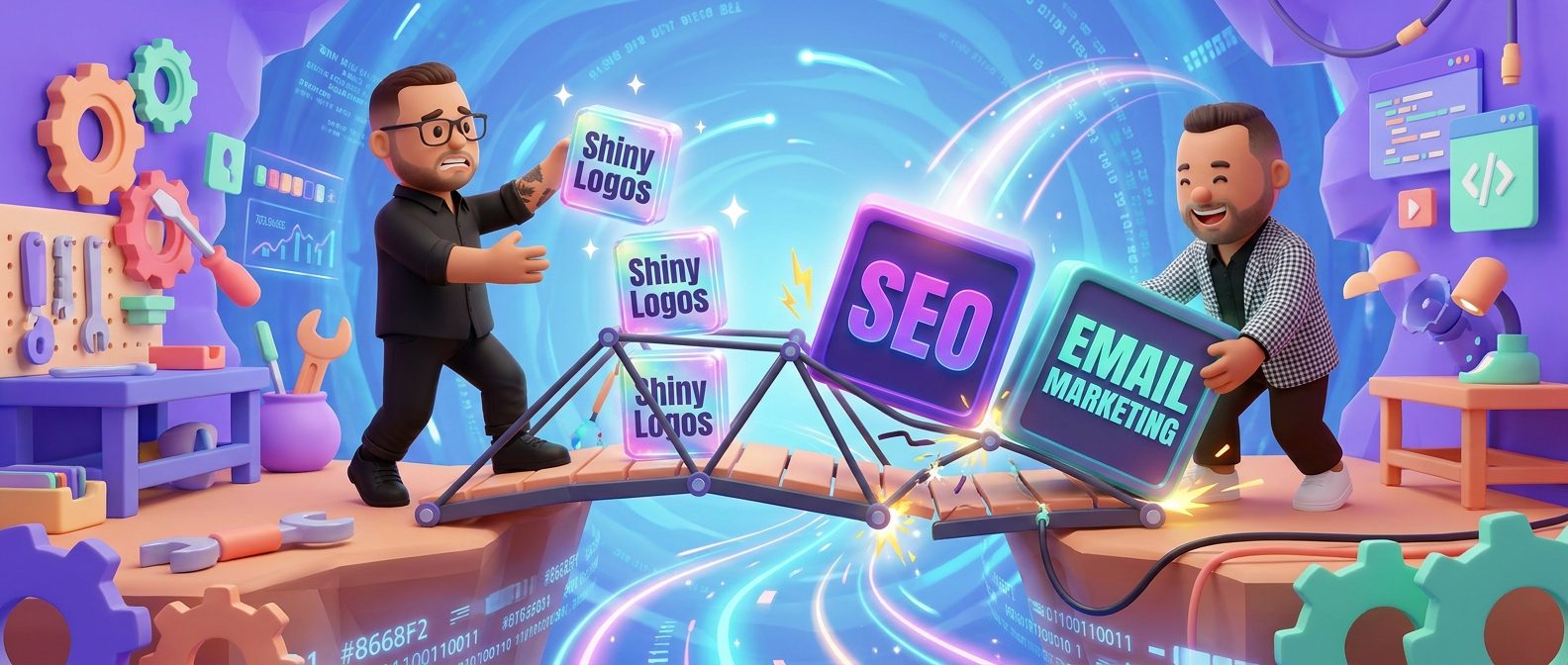
You’ve decided to learn this digital marketing lark, you’ve typed digital marketing courses for beginners into Google, and now you’re staring at forty “Top Courses!” listicles that somehow all recommend suspiciously similar affiliate links. Breathe. Sit down. We’ll be the sensible grown-up in the room for the next ten minutes, because here’s what nobody flogging a course wants to say out loud: where you start matters far more than which shiny logo ends up on your certificate.
Most beginners begin in completely the wrong place. They dive head-first into Meta ads or TikTok trends before they understand why a single human being buys anything. That’s learning the backflip before you can stand up. So let’s sort the running order out, foundations first and hype last, and show you where to actually begin.
Starting from scratch to switch careers? Beginners and career changers tread much the same path. Here is our dedicated guide to internet marketing courses for career changers if you are retraining for a new line of work.
Why most digital marketing courses for beginners get the order wrong
The dirty little secret of the beginner-course world is that a lot of them are built to feel productive rather than make you competent. Two hundred video lessons, a progress bar that fills up beautifully, and a certificate at the end proving you can reliably press “play.” What you don’t get is the one skill that actually pays the bills: getting a stranger on the internet to hand over their money.
The good news is that the skills that matter in 2026 haven’t changed half as much as the gurus pretend. SEO, content, email, paid media and analytics still do the heavy lifting, and AI tools just help you do all five faster. Entry-level digital marketing roles in the UK still start at roughly £25,000 to £30,000, and the sector has been growing around 10% a year. But nobody pays that for someone who has watched a lot of tutorials. They pay for someone who can do the work.
Before you spend a penny, it’s worth being honest about whether a course is even the right move for you. We laid out the full, sales-pitch-free version of that argument in our honest verdict on whether digital marketing courses are worth it. Read it, then come back. We’ll keep your seat warm.
Foundations first: what every beginner needs before touching a single channel
Channels are the fun bit. They’re also the bit everyone rushes. Here’s the unglamorous truth: a channel only works if the thinking underneath it is sound. Get these four foundations in place and every tactic you learn afterwards lands ten times harder.
- How buying actually works. Marketing psychology, not jargon. Why people notice, trust, and finally buy, and why most of them do nothing at all. Get this and everything else is just delivery.
- Messaging and copy. You don’t need to be Hemingway, but you do need to make a benefit obvious to a distracted human in three seconds. Words move money. Always have.
- The customer journey. Nobody goes from “never heard of you” to “take my card” in one click. Understand awareness, consideration and decision, and you’ll stop blaming the ad when the real problem is the funnel.
- Analytics literacy. You don’t need to be a data scientist on day one, but you do need to know what a conversion is and how to read GA4 without crying. If you can’t measure it, you’re guessing.
Notice what isn’t on that list: no platform, no tool, no “growth hack.” That’s deliberate. Tools change every six months; the foundations have paid the bills for a hundred years.
The beginner roadmap: a sensible order to learn in
If you want a simple path from complete novice to genuinely employable, follow this order. It’s roughly three to six months of consistent effort, not the weekend the ads keep promising.
Phase 1 — Get the foundations (weeks 1 to 3)
The four things above. Don’t skip this to feel fast. This is the bit that makes you different from the 90% who never get past tutorials.
Phase 2 — Pick ONE organic channel and go deep (weeks 3 to 8)
One. Not all of them. Choose either SEO and content, or email marketing, and get genuinely good at it. Depth beats a scrapbook of shallow badges every single time, and one strong skill gets you hired faster than five weak ones.
Phase 3 — Add paid media and analytics (weeks 8 to 14)
Now learn the basics of Google Ads or Meta Ads, and get comfortable inside GA4. Paid amplifies what already works, which is exactly why we put it after you’ve learned to make something work organically.
Phase 4 — Layer in AI and build a portfolio (ongoing)
Learn to use AI tools to draft, research and analyse faster, not to think for you. Then prove it: a real campaign, a ranked article, a list you actually grew. A portfolio beats a certificate in every interview we’ve ever sat in.
Free vs paid digital marketing courses for beginners
You can genuinely start for free, and you should. The vocabulary, the fundamentals and a surprising amount of the tooling are all available without spending a thing:
- Google Digital Garage and Skillshop — solid, free, and good for the basics of search and analytics.
- HubSpot Academy — genuinely beginner-friendly courses in content, email, SEO and social, with recognised certificates.
- Meta Blueprint — the place to learn Facebook and Instagram advertising from the people who built the platforms.
- Government-funded Level 2 qualifications — if you’re in England, fully funded accredited courses exist for eligible adults. Free, certificated, no catch beyond eligibility.
So why pay at all? For three things free can’t reliably give you: structure (a path, not a 4,000-video maze), feedback (someone telling you why your work isn’t landing), and accountability (an actual reason to finish). That’s what a paid course buys you, not secret knowledge. If you want to know what those things tend to cost across the UK market, we crunched the numbers in our 2026 price guide to digital marketing courses.
How to spot a good beginner course (and the red flags)
Not all courses are created equal, and the marketing-est marketers tend to sell the emptiest courses. Here’s how to tell them apart.
- Green flag: it teaches principles you can apply anywhere, not just “click here, then here” on one platform that’ll redesign itself next Tuesday.
- Green flag: real feedback on real work — projects marked by a human, not a quiz marked by a robot.
- Green flag: an honest scope. “Get good at email in eight weeks” beats “become a full-stack marketing genius by Friday” every time.
- Red flag: screenshots of sports cars and beachside laptops. If the sales page sells a lifestyle instead of a syllabus, run.
- Red flag: “lifetime access to 600 lessons!” Volume is not value. It’s usually a playlist wearing a lanyard.
For the bigger picture on how courses fit into a serious 2026 strategy, and whether the format still earns its keep at all, our pillar guide on whether digital marketing courses are still relevant in 2026 is the right place to go next.
Digital marketing courses for beginners: your questions answered
Can I learn digital marketing with no experience at all?
Yes. Practically everyone in the industry started with zero. Digital marketing is one of the most beginner-friendly skilled careers going, because the entire internet is your free textbook and your practice ground. What you need isn’t experience; it’s a sensible order to learn in and the discipline to do the work.
How long does it take to learn the basics?
Plan for three to six months of consistent effort to get genuinely employable in one area, at a few hours a week rather than a heroic all-nighter. Anyone promising expertise in a weekend is selling you the weekend, not the expertise.
Do I need a degree or formal qualification?
No. The vast majority of UK employers care far more about what you can do than what’s framed on your wall. A small portfolio, such as a ranked article, a campaign or an email flow you built, beats a certificate in almost every interview. Qualifications can help, but proof helps more.
Should a complete beginner go free or paid?
Start free to learn the language and confirm you enjoy it, then move to paid when you want structure, feedback and accountability to turn scattered knowledge into a real skill. There’s no shame in either; just don’t pay for something a free course would have taught you just as well.
Which skill should I learn first?
After the foundations, pick one organic channel, either SEO and content or email marketing, and go deep. They’re forgiving for beginners, they don’t burn a budget while you learn, and they’re the skills clients ask for first. Save paid ads for once you can make something work without spending money to do it.
Where to actually start
Here’s the whole article in one breath: learn the foundations before the channels, go deep on one thing instead of dabbling in everything, start free and pay only for structure when you’re ready, and build proof rather than collecting certificates. Do that and you’ll be miles ahead of most people who’ve spent triple the money and learned a third as much.
And if you’d rather learn from people who teach the doing, not the dreaming — plain-spoken, practical, not a sports car in sight — come and learn with us at The Legacy Room. We build our courses for brains, not badges.

 Boost open rates