 James Kavanagh
Contents
- What is an internet marketing course, exactly?
- What internet marketing courses actually cover in 2026
- Why bother learning internet marketing in 2026?
- Who internet marketing courses are actually for
- What separates a good internet marketing course from a dud
- Internet marketing courses: frequently asked questions
- Ready to learn this properly?
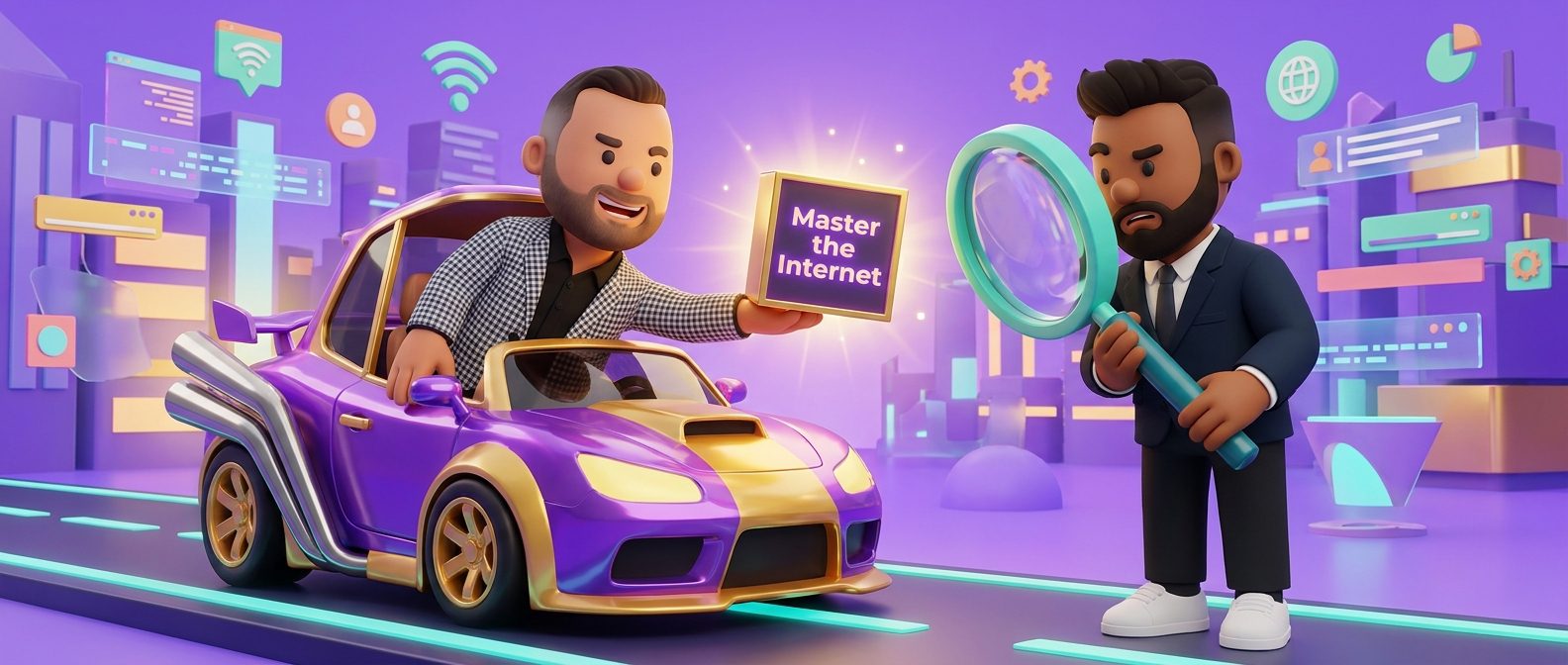
Internet marketing courses are having a bit of a moment — and not the quiet, dignified kind. Every man, his dog, and his dog’s side hustle now seems to be flogging a “master the internet in a weekend” bundle. Some are brilliant. A lot are digital landfill. So before you hand your card details to a chap on YouTube posing in front of a rented supercar, let’s talk about what these courses actually are, what they cover in 2026, and how to tell the gold from the guff.
Here’s the short version: a good internet marketing course teaches you how to get strangers online to notice you, trust you, and buy from you — on purpose, repeatably, without sacrificing a goat to the algorithm. That’s the whole game. Everything else is detail. But the detail is where the money lives, so let’s get stuck in.
Once you know what they cover, the natural next question is whether they pay off — here is our honest reality check on whether internet marketing courses actually get you a job.
What is an internet marketing course, exactly?
“Internet marketing” is one of those phrases that’s been knocking about long enough to feel a little dated, but it simply means marketing that happens online. You’ll hear it swapped out for “digital marketing” and “online marketing” all the time — and for 99% of purposes, they’re the same animal in a different coat. If you want the full family tree of terms, our complete guide to online marketing courses untangles where each one overlaps.
An internet marketing course, then, is any structured training that teaches you to attract and convert customers through online channels: search engines, social media, email, websites, and paid ads. The good ones are hands-on and practical. The bad ones are forty hours of a stranger reading definitions at you. And if you’re still asking whether any of this is worth learning in the AI era, we made the full case in our pillar piece on whether digital marketing courses are still relevant in 2026. Short answer: yes — if you pick the right one.
What internet marketing courses actually cover in 2026
The syllabus has moved on. Five years ago, “post consistently and use plenty of hashtags” passed for a strategy. In 2026, a proper internet marketing course covers a genuine stack of skills. Here’s what you should expect to find inside a decent one:
- Search engine optimisation (SEO). How to rank on Google without bribery or black magic — keyword research, on-page structure, the technical basics, and content that actually answers what people are searching for.
- Paid advertising (PPC). Google Ads and paid social, where you pay to skip the queue. Done well, it’s a printing press. Done badly, it’s a bonfire with your budget as kindling.
- Social media marketing. Not “how to go viral” nonsense — real audience-building, organic content, and the unglamorous art of turning followers into buyers.
- Content marketing and copywriting. Blogs, landing pages, emails, video scripts. Words that sell, not words that simply fill the page.
- Email marketing and automation. The channel everyone ignores and the one that quietly prints the most money. Lists, sequences, and the CRM basics that hold it together.
- Analytics and data. Reading the numbers so you can stop guessing. GA4, conversion tracking, and learning which metric actually matters (spoiler: it isn’t likes).
- AI tools. The big 2026 addition. Using AI to speed up research, drafting, and testing — without letting it churn out bland slop under your name.
Notice there’s a lot in there. That’s the point. A serious course teaches you the whole system and how the pieces fit, then lets you specialise. If you want the deeper, module-by-module teardown, we’ve already written it up in our breakdown of what digital marketing courses actually teach. Same skeleton — a lot more meat on the bones.
Generalist first, specialist second
One honest word of warning: don’t rush to specialise before you understand the whole board. Plenty of people pay for an “advanced Facebook Ads” course while having no clue how ads fit into a funnel, an email list, or a landing page. The result is an expensive skill with nowhere to plug in. A good internet marketing course gives you the full picture first, then hands you the freedom to go deep where you fancy it.
Why bother learning internet marketing in 2026?
Because demand isn’t cooling — it’s specialising. The projected average salary for digital marketing roles in the UK sits at around £41,000, with entry-level marketers often starting in the mid-£20,000s and heads of digital comfortably pushing past £100,000. London and the South East typically pay 10–20% above the national average, though remote work is quietly flattening that gap.
And here’s the real kicker for 2026: AI skills. Roughly two-thirds of UK digital leaders now say they won’t hire someone without them, and AI-related hiring is growing around 30% faster than the wider market. Translation — a course that teaches you to genuinely use these tools has gone from a nice-to-have to the price of entry.
Whether you’re chasing a job, going freelance, or just trying to stop your own business from marketing itself into a ditch, the sums are simple: the skills pay back the course, usually several times over. If you’re weighing up the outlay, our 2026 UK price guide sets out what you should realistically expect to pay.
Who internet marketing courses are actually for
Short answer: more people than you’d think. In practice, they tend to suit four crowds:
- Career starters and changers who want a portable, in-demand skill set without a three-year degree and the debt to match.
- Business owners who are tired of paying agencies for things they don’t understand and would rather hold the reins themselves — our pick of the best internet marketing courses for entrepreneurs is aimed squarely at them.
- Freelancers and creators who can already do the work but want to package, price, and sell it properly.
- Employed marketers who need to plug a specific gap — usually paid ads, analytics, or AI — before their next review or job hunt.
If you’re in none of those camps and just fancy understanding how the internet actually separates people from their money, that’s a perfectly good reason too.
What separates a good internet marketing course from a dud
Here’s where we get opinionated, because someone has to. A good course has three things a bad one simply doesn’t:
1. It’s built around doing, not watching
You don’t learn to swim by watching a documentary about water. If a course is 90% talking-head video and 10% “now go and try it,” bin it. The best programmes hand you real briefs, real feedback, and something you’ve genuinely built by the end — not just a certificate and a vague sense of having sat through something.
2. It’s taught by people who still do the work
Be wary of the guru whose last live campaign was in 2018. The internet moves far too quickly for stale knowledge to be worth much, so it helps to know which parts of the syllabus date fast and which never do. You want tutors who are still in the trenches — breaking things, fixing them, and keeping up this quarter — not reciting theory from a decade ago. A shiny badge tells you less than you think here, which is why it pays to understand the real gap between an accredited and non-accredited course before you judge one by its certificate.
3. It fits how you actually learn
Some people thrive going solo at 2am. Others need a live cohort and a deadline breathing down their neck. Decent providers give you options — self-paced, blended, or one-to-one intensive — so you’re never force-fed a format that doesn’t suit you. That’s exactly how we structure things at The Legacy Room, because one size has never once fitted all.
Get those three right and the price almost stops mattering. Get them wrong and even a free course is overpriced.
Internet marketing courses: frequently asked questions
Are internet marketing and digital marketing courses the same thing?
Near enough. “Internet marketing,” “digital marketing,” and “online marketing” all describe promoting a business through online channels. The label matters far less than the syllabus, so check what’s actually taught before you judge a course by its name.
How long does an internet marketing course take?
Anything from a weekend crash course to a year-long university module. Most practical online courses run somewhere between six and twelve weeks part-time. The right length depends on how deep you want to go and how much time you can spare each week. We break the timings down properly in our full guide to how long an internet marketing course takes.
Do I need any experience before I start?
No. The good beginner courses assume you’re starting from zero and build up from there. If a course expects you to already know what a conversion funnel is, it isn’t really a beginner course — it’s an intermediate one wearing a beginner’s badge.
Can I learn internet marketing for free?
Some of it, yes — there are excellent free resources out there. The catch is structure and feedback. Free content teaches you the “what,” but rarely the “why” or the “is this any good?” A paid course buys you a clear path and a real person to tell you when you’ve gone wrong.
Will an internet marketing course get me a job?
A course on its own won’t. A course plus a portfolio of real work will take you a very long way. Employers in 2026 care far more about what you can show them than about which certificate you can wave.
Is it worth paying for a course in the age of AI?
More than ever. AI can execute, but it can’t strategise, judge, or know what “good” looks like — that’s the human bit, and it’s precisely what a proper course teaches. AI makes trained marketers faster and untrained ones dangerous.
Ready to learn this properly?
Internet marketing isn’t magic and it isn’t rocket science — it’s a set of learnable skills that most people fumble simply because nobody ever taught them in plain English. Closing that gap is the entire reason we exist. If you’d rather learn from people who still do the work every day, minus the corporate waffle, come and see what we’re building at The Legacy Room. Brains optional on arrival — mandatory by the time you leave.

 Boost open rates